It was a very busy May for me with two graduations flanking a big trip to Europe I took to document gold thread making and silk velvets. Those types of trips end up paying dividends for years with new threads, understanding, relationships, papers, and lectures spinning out of them. My cameras and notepads are full and the boxes of threads are already arriving. So while it might be really annoying to plan your purchases a little or wait an extra few days/weeks for packages to arrive, there are huge benefits to me getting out there.
I was also able to spend a day at a collection in the UK investigating many pieces of 17th century embroidery I haven't seen before but have been on my research list. And there have been many other productive things I have been up to! I wrote an enormous article on Martha Edlin for publication and I am more than super excited about that. Can't wait until it is in print and I can start talking more about that work.
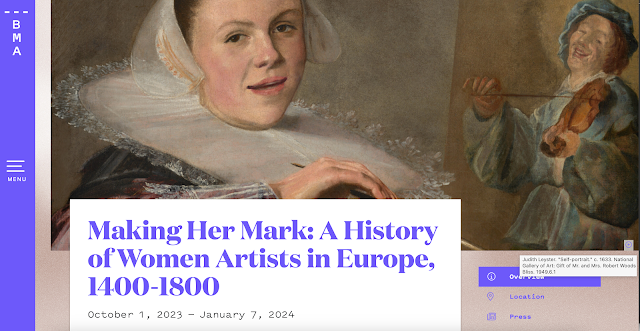
And another out-of-the-blue request came in that I was able to squeeze in before I left for a family trip to Africa to celebrate the graduations. I am going to be a guest voice on a museum audio guide!!
A really lovely concept was forwarded for the exhibition audio guide - ask contemporary artisans to comment on the pieces from their own perspectives as female artists. I was asked to choose several of my favorite pieces that will be on display and record in the studio. What was absolutely fabulous about the objects in the exhibition up for me to choose from was that I had researched every one of them up close and so knew them very well and had my own photography to rely on for coming up with the stories I wanted to tell.
I can't reveal any details right now but if you love 17th century embroidery, put a stop in Baltimore between October 2020 and January 2024 on your list. And listen to the audio guide and you just might hear me talking!
I am always looking for good YouTube or other documentaries on PBS to watch while I work putting threads into kits or embroidering for instructions. Yesterday I came upon a nice 2.5 hour documentary on YouTube I thought I would pass on.
I love seeing artisans who make things be profiled. You get to appreciate the work that goes into their craft and understand why something is valued (or should be valued). It also serves as a top level documentation of their processes.
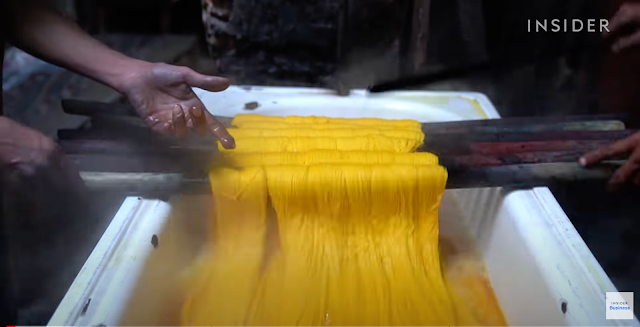
For some reason, Business Insider has been doing this for a long time with documentary crews going to different parts of the world to record the 'last of'. Their series is called "Still Standing" and this is the playlist of amazing traditional crafts and their stories of the people keeping the tradition alive as well as documenting the process.
There are weavers, block printers, dyers, carvers, stone shapers, soy sauce makers, painters, etc. featured. In each case you see the love for the craft and hear of the pressures on their survival. For those of us who are lovers of fine embroidery supplies, you know the hardships it has taken to keep our suppliers working.
This is very relevant to me as I spent part of May in Europe visiting artisans in Venice, Vienna and the UK as part of a joint Gold Thread Artisan grant with my colleagues Cristina Carr at the MET and Mary Brooks of Durham University. We have been working on a study of gold threads of the 17th century and it was time to visit my manufacturers so they could see it live and armed with new knowledge gleaned from primary sources I have been digging up, we could ask pointed questions of those who do.
One of the sites we visited was Mario Menegazzo's gold beating workshop to see him make leaf by hand. Gold leaf was used heavily in the 17th century to make Venice Gold threads. We had observed many things under the microscope and needed to show him pictures and discuss what he knows (he is also a metallurgist like me) and what has been written (not so accurate which was what we thought).
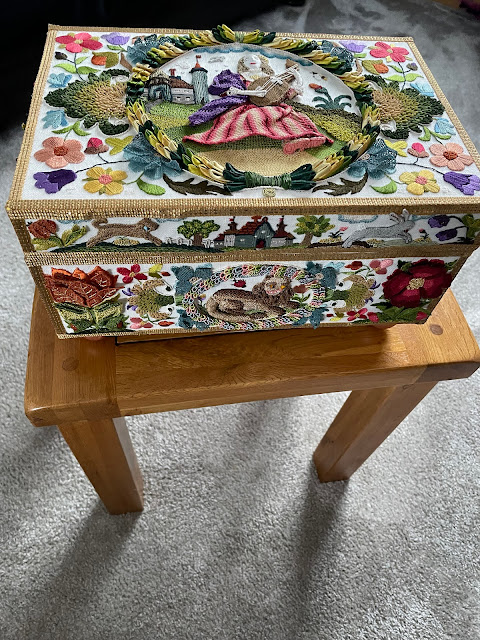
You can see a lovely short documentary about his work here. It was fabulous to see the entire process that day and film it. But the conversations after were priceless. What a lovely and wonderful family as well. I purchased gold and silver leaf for my casket feet and can't wait to gild them to have special memories of the people who made the material incorporated into my casket.
Tracy Hall in the UK has finished her Harmony Casket and it is just wonderful! It is always fantastic to see the pieces finished and hear the stories and sense of accomplishment from the students in these classes. Their pieces will be long time family heirlooms!
Look at the super cute shoes and how well Harmony is worked on the top. At first I thought I was seeing a picture of my example. Her finishing is just so crisp too!
Congratulations Tracy! She is now working on a double casket - it is hard when you get hooked!
I don't normally get emails from detectives every day - but my inbox had an unusual request this week. A police detective from the Newburyport Police Department contacted me about a cold case he was trying to bring back and solve.
Way back in 2014 as I was working on geneology regarding a set of samplers from Newbury and Newburyport with the curator of the Museum of Old Newbury, I brought out of my folder a picture of a 1820 sampler by Lydia Comb Bartlett to show him. It was a listing off Ebay. He was stunned and upset and immediately rushed to the object files.
The sampler was owned by the museum and had been in storage. Now I had just shown him that it had been recently sold on Ebay. Yes, it was missing. I had also tracked it to a 2011 auction where a better picture was held. It was reported stolen and unfortunately didn't rise to the level of investigation at the time or as the detective said, it fell though the cracks.
So the detective contacted me to have me use my knowledge of the sampler field as well as Newbury samplers to help them generate leads. I have already turned over several as well as notified many who come across collections and large amounts of pictorial data on samplers. The major sampler dealers are now on the look out. But he asked if I would put the call out on blogs so many eyes will be checking as well. The sampler was purchased by someone innocent, not knowing that the sampler was missing from a museum. And it is pretty clear that the sellers did not know that the sampler was museum property too. It is very easy for antique material to get back into the market without being noticed and passing hands quickly. That is why major auction houses and buyers above a certain amount are keen to know the provenance of objects and that is often listed going back into the 19th century on auction listings. Few people want to buy something that is ill gotten.
If you know the whereabouts of this sampler. You can contact:
Travel has returned with a vengeance this year. I thought 2022 was stacked with events but this year hasn't let up. We had a stretch of a month with a robot competition every weekend we had to fly to as soon as my youngest son recovered from his brain injury from concussions (we are all still recovering from that trauma). This has been followed by travel regarding admitted student days and now the World Championship is just around the corner. Then work trips regarding textiles, two graduations to host and a family trip. On top of it my robotics team which is disbanding gets one last hurrah! We have been invited to compete in the off-season PanAsia Tournament in Australia this summer. And the kids decided to go! So we will be dragging the robot stuff (somehow) to Sydney and then traveling in a pack around Australia for a few weeks before they all move into their colleges.
So I have looked at the calendar and chosen all the periods where I could ship in volume for a few weeks and posted them on the shop.
April 4-14th
May 9th-16th
August 1-18th
As always, if you make an order in between, I will do my best to fill it that week and if I can't, I will let you know. But for obvious reasons, I can't post my exact out of town dates.
I will be doing some amazing work travel late spring - visiting some new production places in Italy and visiting old friends to cook up new threads. Those trips always result in a few years of amazing things we all get to enjoy.
I am still hoping for a Frostings Box this year, but production of threads for it stopped for many months because of the Coronation and I am sure the professional embroiderers are now stitching 24/7. Suddenly discussion of thread back-production has restarted. I have boxed what I have and in this batch is something I have been working on since the Plimoth Jacket to get back into production. I seriously thought about just keeping it all for myself as it has been so hard won.
I am still on track to introduce my completely revamped Sampler Design course in a few months. I have been busy constructing units on design, filming shorts, and charting motifs. I have several other smaller courses in development but until all the threads show up, I am waiting to talk about them. And I am testing some licensing agreement ideas with a major museum right now in the hopes that I can find a way to put some of my popular historical lectures online through my teaching site with ticketed views. It has taken me six months to finally get someone in the dept to listen to the idea and agree to estimate a proposal. Cross our fingers!
Robin and Holly have published the second half of their blog on the Lord Chancellor's Burse with more of their story and lots of really wonderful pictures. There is quite a bit of context about many of the burses that are known and their larger research project which included a summer 2022 workshop on gold thread manufacture and embroidery I ran with Robin at CMA.
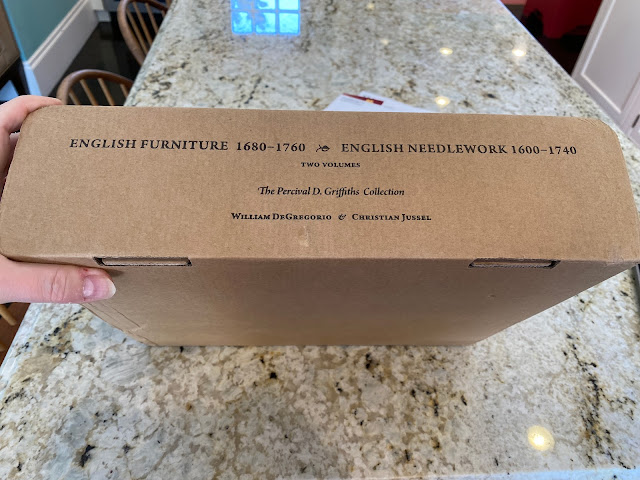
There is a new book out on the 23rd of March that will become one of those 'rare library' books almost immediately. There are many interesting facets of the book set to mention - many storylines. But first, some pictures and video of the unboxing of this massive 2 volume set covering furniture and embroidery.
This week the Magazine Antiques and Art Weekly have an article on how the books happened. Avid collector John Bryan Jr. commissioned the project before his passing in 2018. I feel fortunate to have visited his collection years ago, seeing many key objects that have fed into my research. We owe John a debt of gratitude for funding this piece of research to pull together the existing pieces from this monumental turn of the century collection by Percival Griffiths so new research can happen.
William DeGregorio graduated from the Bard College around the time of the seminal exhibit Twixt Art and Nature and worked at the MFA Textile Department as well as for Cora Ginsburg in NYC. While not well known to the embroiderers of today, he is well known in the research and collecting sphere. It was fun to get an email from Billy, as he is known, with pictures of rooms in Percival Griffiths home with a object on the wall circled and a 'do you have any idea where this is!?'; an invitation to join him for an afternoon in the detective hunt for where these magnificent embroideries have ended up. Billy knew a handful of us who have been hunting in private collections or the back rooms of museums who might have a visual memory of something he was having special difficulty tracking down. I remember the day when I was able to email him back and say - YES - I knew where a particular small set of baskets were - behind me in the dining room! I had been able to acquire a set of them before people knew they were originally part of this huge collection. So I am happy to have my pieces in the volume and identified.
The volume on embroidery is about the story of how needlework collecting happened and of Sir Griffiths collection in particular. This is fascinating as you wander through the inventory of pieces and realize that the majority of several seminal collections on the topic are dominated by what he found to be interesting. This is important to me as I am doing some large survey work and was starting to wonder about numbers of types of objects that could be found and wonder if that was meaningful. I have readjusted that thinking now that I have wandered the volume realizing how what we see today is so much the product of a handful of collectors in the late 19th century and their personal interests.
Griffiths left two bread crumb trails for Billy to follow. A set of photographs of his home's interiors and a book where he pasted photos of the objects collected. This volume has a new photograph of an object and its location if it could be found and uses the older photo if not. This is enormous as it means that some pieces we haven't seen have been modern photographed and others that we didn't know exist do have a picture now published. I can't tell you how many "AH HA" moments I had wandering through the pages for hours on Friday when my advance copy arrived.
I know that the cost of this volume set may be prohibitive at $300 and the run is only 1200 copies. Perhaps you can convince a large local library that it is a must for their collection. But there may be one or two readers who decide this is a must have for themselves, especially if they love furniture. It can be preordered through many outlets. But at the very least it is interesting to see how much of an influence collectors have on preservation and our museum collections, how their personal interests affect what we know, and how their largess can enable more research to occur.